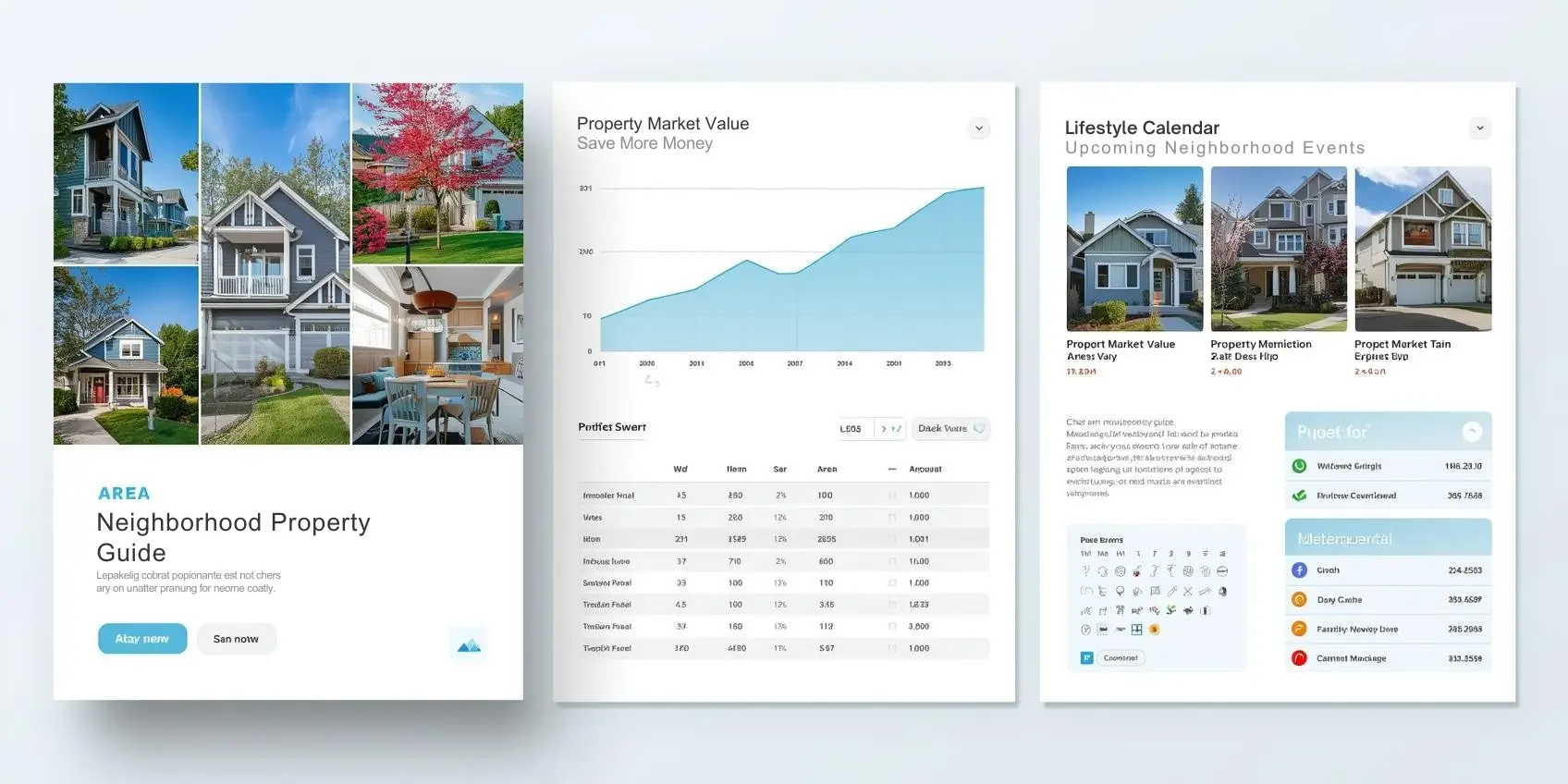
How to Gather Information for Neighborhood Property Guides That Actually Attract Local Buyers
 By Open House Insights Team··Updated
 Most neighborhood guides fail because they focus too narrowly on listings and prices. Buyers want to understand what daily life looks like before they care about square footage or comps.
Strong neighborhood and community-focused content blends three things: local lifestyle insights, relevant market data, and real community connections. When done right, these guides position you as both a local expert and a trusted resource, not just another agent.
This guide breaks down exactly what information to gather and how to turn it into content people save, share, and come back to.
Start With Local Lifestyle and Niche Interests
Neighborhood guides should reflect how people actually live in the area. Go beyond real estate basics and highlight what makes the community feel like home. This approach is a core part of a strong open house lead management strategy, because the leads your content brings in are warmer when they already feel connected to the area.
Outdoor Activities and Local Hobbies
Identify activities that locals genuinely enjoy and that new buyers would care about. Instead of simply listing "hiking trails," name the specific spot and say why it matters, for example, a sunrise run along the Millbrook Greenway, a three-mile paved loop around the reservoir that fills up on weekend mornings because of the views from the north bend. That one sentence does more work than a four-item bullet list.
- Named hiking trails, walking paths, or nature reserves, with a note on difficulty and who they attract
- Kayaking spots, fishing areas, or beaches with seasonal access details
- Community gardens or gardening clubs open to new residents
- Dog parks and pet-friendly spaces, including any off-leash hours
Focus on specifics: where people go, why they like it, and who it's best for. This helps buyers imagine themselves living there.
Family-Friendly and Community Life
For many buyers, lifestyle revolves around family and social connection. A Saturday farmers market on the town green, running May through October, with about forty local vendors and a dedicated kids' activity tent, is the kind of detail that sticks. Look for:
- Kid-friendly attractions like playgrounds, libraries, and sports programs
- Local farm markets and food trucks, including days and hours
- Seasonal activities such as apple picking, holiday markets, or annual festivals
- Community traditions like parades, fun runs, or outdoor movie nights
These details make your guide feel local instead of generic.
Local Recipes and Small Business Features
Corner Grounds, the café two blocks off Main Street, has been making the same cardamom cold brew since 2019 and the owner, Maria, will share the recipe with anyone who asks. That single sentence does what a bullet list never can: it gives a buyer a reason to walk in the door before they've even made an offer. Reach out to a handful of local businesses and offer them a feature in exchange for a recipe, a discount, or a short quote. Business owners who feel seen tend to share your content, which extends your reach far beyond your existing audience.
Compile the Market Data Your Neighborhood Guide Needs
Lifestyle draws readers in. Market expertise builds trust. This section positions you as the professional who understands both the emotional and financial side of buying or owning a home. You can also use AI tools for real estate agents to pull comps and pricing trends faster than doing it by hand, especially useful when you're maintaining guides for multiple neighborhoods at once.
Market Statistics Buyers Care About
Include data that directly impacts decisions, not overwhelming charts. Make it concrete: days-on-market dropped from 28 to 14 between Q3 and Q4 of last year in this zip code, which tells a buyer far more than "inventory is moving quickly."
- Recent interest rate changes and how they affect monthly payments at the neighborhood's median price point
- Average days on market, with a comparison to the same period last year
- Price trends compared to nearby areas, expressed as a percentage change
- Recent comparable sales to show real pricing context
Explain what the numbers mean in plain language. A 0.3% month-over-month price increase sounds small; saying "that's roughly $1,200 added to the median home price every 30 days" makes it land.
Development, Zoning, and Local Laws
Many buyers overlook this information, but it matters long term. Research and summarize:
- New subdivisions or major developments planned nearby
- Infrastructure projects like road expansions or public transit
- Zoning changes or local ordinances affecting homeowners
- Short-term rental or HOA regulations if applicable
This helps buyers feel informed and protected.
Buyer and Seller Strategy Tips
Use your experience to add practical, neighborhood-specific guidance. Generic tips belong in a general buyer's guide; this section earns its place only if it reflects what's actually happening on the ground.
- In this neighborhood, buyers who pair an escalation clause with a personal letter have closed $8k–$15k under the highest competing bid — a pattern that appears most in the $450k–$550k range
- Off-market deals tend to surface through the local Facebook group and two specific streets where long-term owners are aging in place
- Listing in late March rather than early April has historically produced 6–9% stronger sale prices here, based on the last three years of MLS data
Each tip should be something only a local expert would know, that's what separates your guide from anything a buyer could Google.
Curate Community Events and Local Incentives
Event-based content is one of the most "saveable" parts of a neighborhood guide. Buyers come back to it, share it with family members weighing in on the decision, and remember you as the agent who gave them something useful.
Create a Local Event Calendar
Build simple seasonal or monthly lists buyers can reference later. The annual Harvest Block Party, every third Saturday in October, with a chili cook-off that draws about 300 residents, is exactly the kind of detail that makes a neighborhood feel like a community rather than a collection of houses. Include:
- Holiday festivals and town celebrations, with typical attendance and parking notes
- Seasonal markets and fairs, including which ones are rain-or-shine
- School or community fundraisers open to new residents
- Annual traditions locals look forward to, the kind buyers will mention when they talk about why they love the area
Update this section regularly so your guide stays relevant. A stale event calendar is worse than none, it signals that no one is maintaining it.
Add Local Coupons or Special Offers
Reach out to newer or growing local businesses and offer exposure in exchange for a small incentive.
- Free coffee or dessert with purchase for first-time visitors who mention the guide
- Intro discounts for services like gyms or cleaning companies, especially useful for buyers who just moved in
- Limited-time offers for new residents, tied to a welcome packet you hand out at closing
This adds real value and gives people a reason to keep your guide. A buyer who gets a free latte using your guide is a buyer who remembers your name.
Capture Visual and Interactive Content
Once you've gathered the information, presentation matters. The agents whose guides get shared aren't necessarily the ones with the most data, they're the ones whose content is easy to scan, save, and send to a spouse or a parent who's weighing in on the decision.
Video Tours and Walkthroughs
Short, casual videos work best. Ideas:
- Walk through a neighborhood highlighting parks and streets filmed on a weekday morning when the light is good and foot traffic shows the area is active
- Quick clips of local shops or community spaces, ideally featuring the owner on camera for 15–20 seconds
- Seasonal updates showing what the area looks like throughout the year, snow on the green in January, the farmers market in full swing in July
These videos build familiarity and trust quickly. A buyer who has "walked" the neighborhood on their phone before the showing arrives already feeling like they belong there.
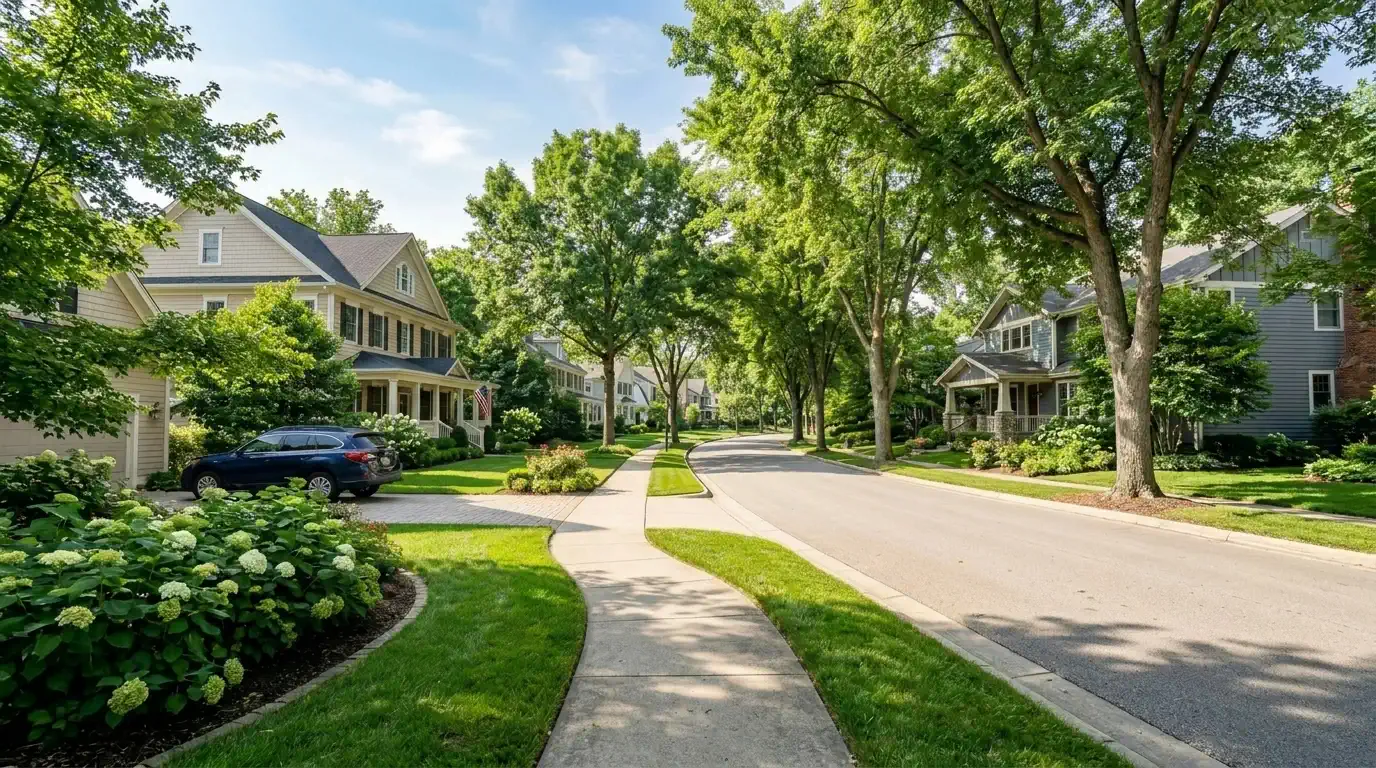
Example: A short neighborhood walk-through video can be filmed in under 20 minutes and repurposed across Instagram Reels, YouTube, and your website.
Canva PDFs for Downloadable Guides
Turn your research into polished, downloadable resources. A well-designed one-page PDF, with your event calendar, a market snapshot, the top three outdoor spots, and two local business highlights is the kind of thing a buyer prints and puts on the fridge. Combine:
- Event calendars with dates and locations filled in
- Market snapshots expressed in plain language, not charts
- Outdoor activity lists with a sentence on each spot
- Local business highlights with hours and a short quote from the owner
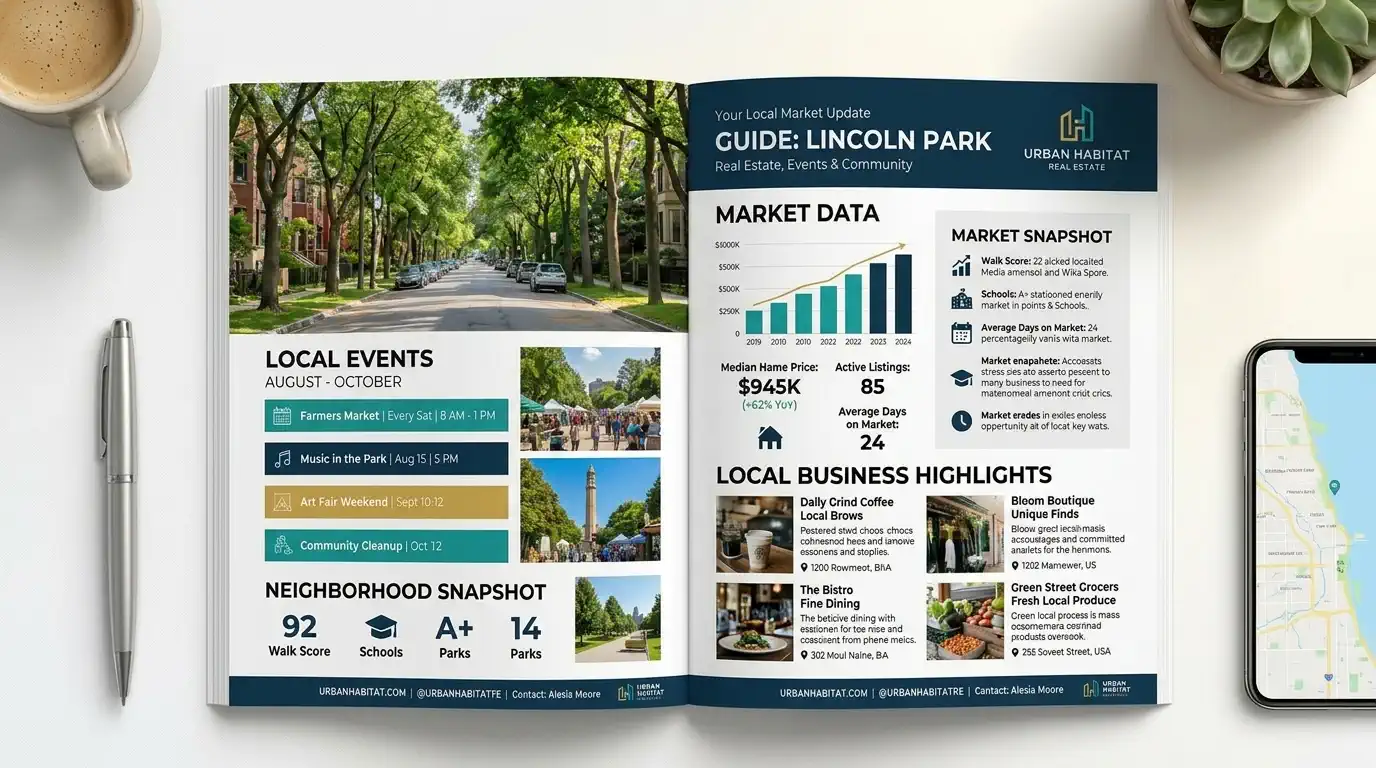
A Canva PDF neighborhood guide can be gated behind a sign-up form to capture leads while delivering real value.
A clean PDF makes your guide feel premium and shareable and a gated download gives you a natural lead-capture mechanism without a hard sell.
Interactive Links and Content Hubs
Use your website or blog as the central hub. Include:
- Links to full articles for each section of your guide
- Embedded videos so buyers can explore without leaving the page
- Updated event pages — link to the live city calendar rather than copying dates manually
This keeps leads engaged and encourages repeat visits. Every return visit is a signal that the buyer is still in the consideration phase and still thinking about you.
Final Tip
The best neighborhood guides don't try to sell. They help people understand a place before they ever book a showing. Focus on lifestyle first, support it with smart market data, and layer in real community connections. When buyers feel informed and welcomed, your name is the one they already trust when it's time to act.
Ready to put this into practice? Use our open house lead management guide to build the follow-up system that converts the interest your neighborhood content generates — so the leads you attract don't go cold before they're ready to move.
Open House Insights Team
The Open House Insights team provides operational guides, compliance strategies, and tech benchmarks for modern real estate professionals.
Ready to experience smarter visitor management?
Generate custom QR code flyers, collect qualified buyer details, and automate your follow-ups instantly. Try OpenHouseInsights for your next open home.